Bad Bunny’s Super Bowl: How Bad Bunny Took A Defiant Stand & Turned The Halftime Stage Into A Caribbean Masterclass
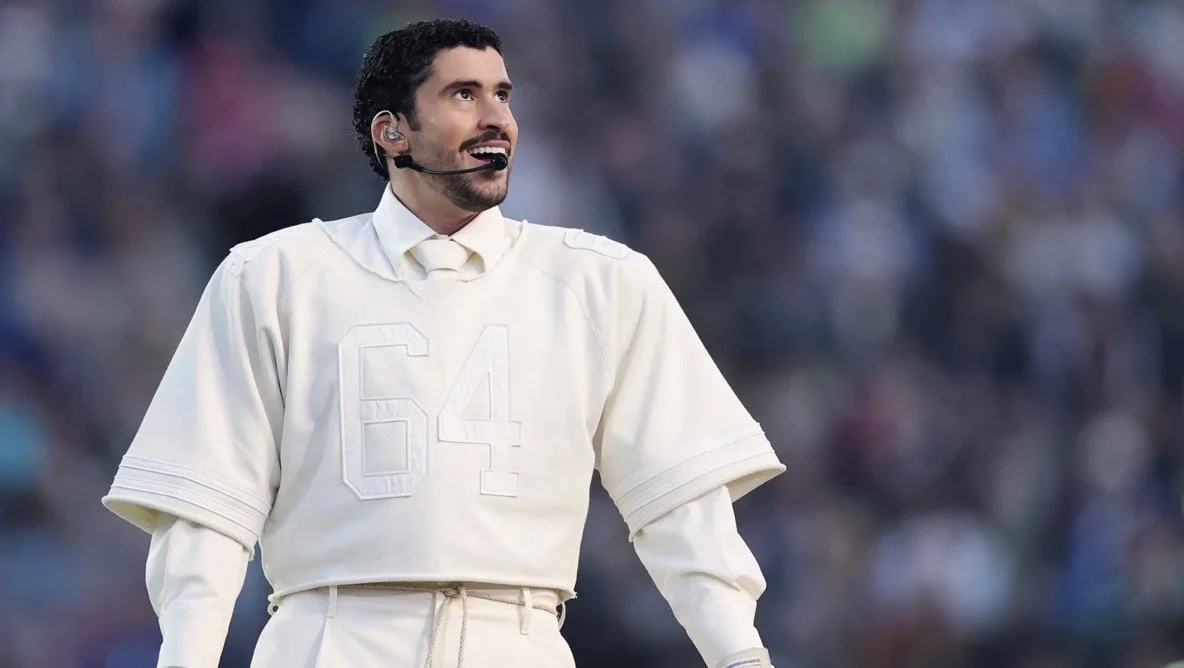
On February 8, 2026, the Super Bowl LX halftime stage in Santa Clara, California, was transformed from a football field into a vibrant, political, and historical landscape of the Caribbean. Bad Bunny’s headlining performance was not merely a musical set; it was a 13-minute masterclass in cultural resistance and a defiant reclamation of the word "America."
A Visual History of the Caribbean
The performance opened with a striking, symbolic set design: a massive sugarcane field filling the stadium floor. For Puerto Rico and neighboring Caribbean nations, sugarcane is a loaded symbol representing centuries of colonial labor, slavery, and economic struggle. By placing himself and his dancers—dressed as jíbaros (rural farmers) in traditional pavas (straw hats)—amidst the stalks, Bad Bunny (Benito Antonio Martínez Ocasio) centered the island’s history of resilience.
The scenery moved through the "textured" life of the island, featuring a recreated "La Marqueta," elders playing dominos, and a piragua (shaved ice) stand. Most pointedly, the artist performed "El Apagón" (The Blackout) while climbing a sparking electricity pole. This was a direct reference to the chronic power failures plagued by Puerto Rico since Hurricane Maria, turning a global broadcast into a protest against the island's current infrastructure crisis.
Political Pressure and the TPUSA Challenge
The road to Levi’s Stadium was paved with intense political friction. Following Bad Bunny’s "ICE out" comments at the 2026 Grammys, conservative groups intensified their opposition. Turning Point USA (TPUSA), led by the widow of its founder Charlie Kirk, attempted a historic "counter-programming" event. Their "All-American Halftime Show," headlined by Kid Rock and featuring artists like Lee Brice and Gabby Barrett, was marketed as an alternative for fans who felt the NFL’s choice was "too woke."
Despite calls from political figures like Speaker Mike Johnson to replace the "niche" artist with someone like Lee Greenwood, NFL Commissioner Roger Goodell remained steadfast. Goodell dismissed the backlash, asserting that the league would not back down and that the Super Bowl was the perfect platform for "one of the greatest artists in the world" to reflect a global, multi-cultural audience.
A Star-Studded "United" America
Bad Bunny’s performance was bolstered by a high-energy "paranda" of celebrity cameos. Lady Gaga shocked the crowd by appearing at a recreated wedding scene to perform a Latin-infused version of "Die With a Smile." Ricky Martin, a pioneer of the "Latin Explosion," joined for a rendition of "LO QUE LE PASÓ A HAWAii," a song criticizing neocolonialism.
Other luminaries like Cardi B, Karol G, Pedro Pascal, and Jessica Alba were seen dancing on the steps of a "casita," reinforcing the idea of the Latino community as an inseparable part of the modern American fabric. The show concluded with a roll call of nations—from Argentina to Canada—as Bad Bunny spiked a football emblazoned with the words: "Together, we are America."
Historical Significance and Viewership
The performance shattered records, garnering an unprecedented 135.4 million views, making it the most-watched Super Bowl halftime show in history. In a political climate marked by debates over immigration and national identity, the show’s significance was undeniable.
By performing almost entirely in Spanish on the United States' biggest stage, Bad Bunny didn't just "represent" his culture; he forced a global audience to acknowledge the Caribbean as a central, rather than peripheral, part of the American story. For Puerto Rico, his final words—"Mi Patria Puerto Rico, seguimos aquí" (My homeland Puerto Rico, we are still here)—served as a powerful reminder of the island’s enduring spirit.
One of the most intimate moments of the performance occurred when Bad Bunny stopped at a recreation of a local bar to take a shot with Maria Antonia "Toñita" Cay, the legendary matriarch of the Caribbean Social Club in Brooklyn. Known affectionately as "the Queen of Williamsburg," Toñita has spent over 50 years maintaining the club as a sanctuary for the Puerto Rican diaspora in New York. Her presence on the Super Bowl stage was a profound nod to the "Nuyorican" experience, bridging the gap between the island and its communities abroad, and honoring the elders who have kept Caribbean culture alive in the States.
Adding to the show’s emotional weight, Bad Bunny shared a pivotal scene with five-year-old actor Lincoln Fox, who portrayed a young version of the superstar. In a scripted segment, the boy was seen watching Bad Bunny’s actual 2026 Grammy acceptance speech on a vintage television before the artist himself appeared and handed the child his real Grammy Award. This gesture served as a symbolic "passing of the torch" to the next generation of Latino youth, reinforcing the message that their dreams are valid and attainable. While social media briefly and incorrectly speculated that the boy was Liam Ramos—a child recently detained by ICE—the confusion only underscored the heightened political stakes of the evening, turning a moment of personal inspiration into a broader conversation about the protection and future of immigrant children in America.
