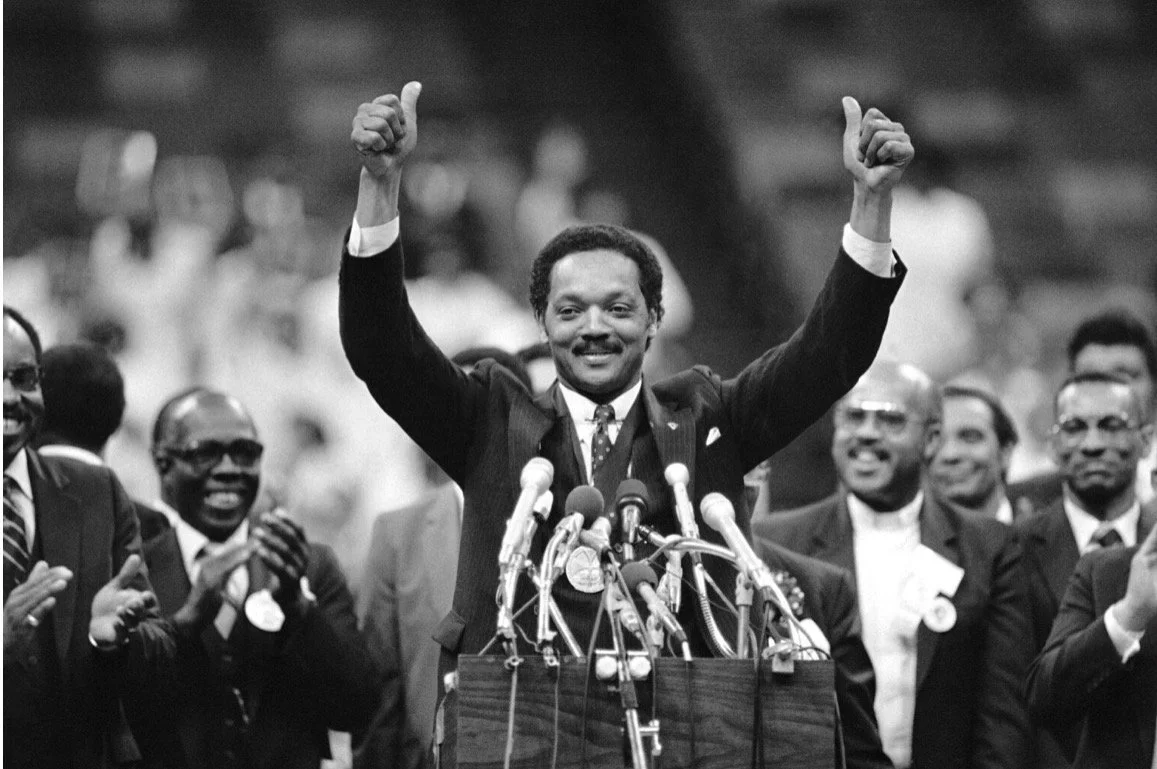
The World Mourns A Civil Rights Giant: Tributes Pour in as the Nation Bids Farewell and Celebrates the Life and Legacy of Rev. Jesse Jackson Sr.
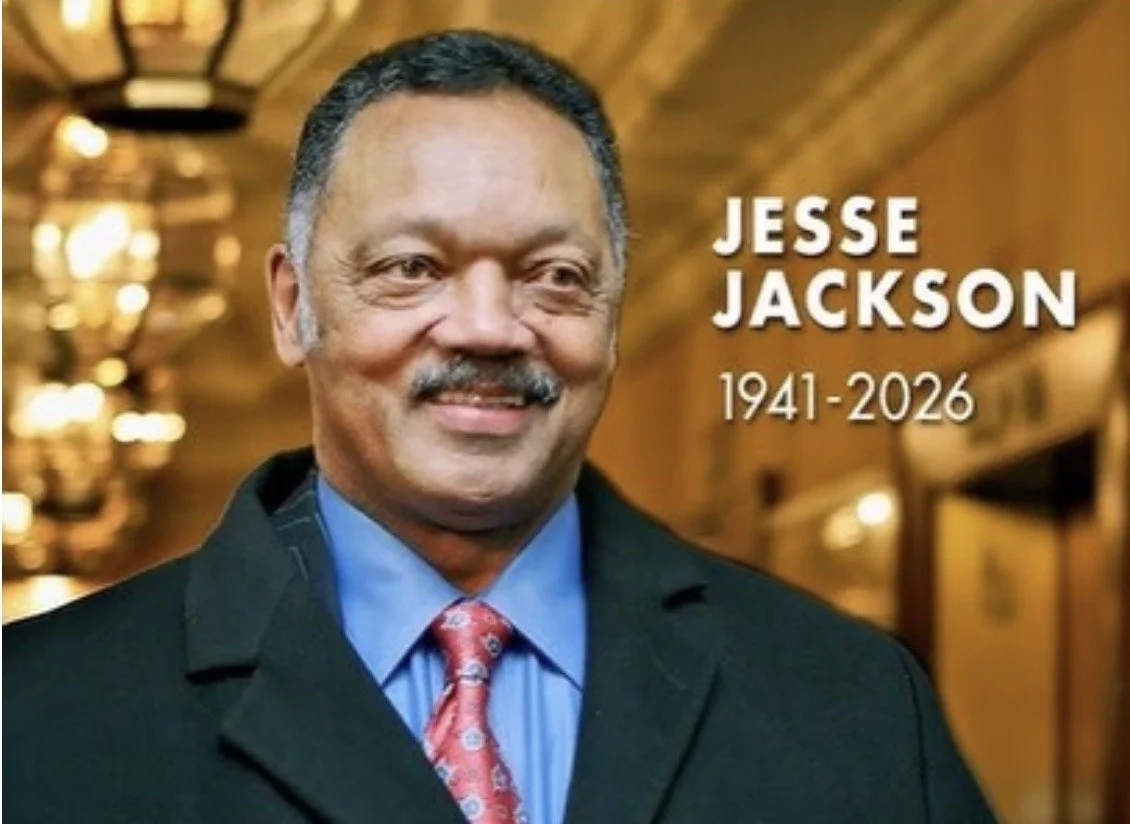
The world mourns the loss of a titan. On February 17, 2026, the Reverend Jesse Louis Jackson Sr., a cornerstone of the American Civil Rights Movement and a two-time presidential candidate, passed away at the age of 84. His family confirmed that he died peacefully at his home in Chicago, surrounded by loved ones.
For over a decade, Jackson had been battling significant health challenges. While initially diagnosed with Parkinson’s disease in 2017, his condition was later identified as progressive supranuclear palsy (PSP), a rare and aggressive neurological disorder that gradually stripped him of his ability to walk and speak. Despite his declining physical state, Jackson remained a fixture in the struggle for justice until his final days, often appearing in a wheelchair to support voting rights and social equity.
A Life Dedicated to "The Least of These"
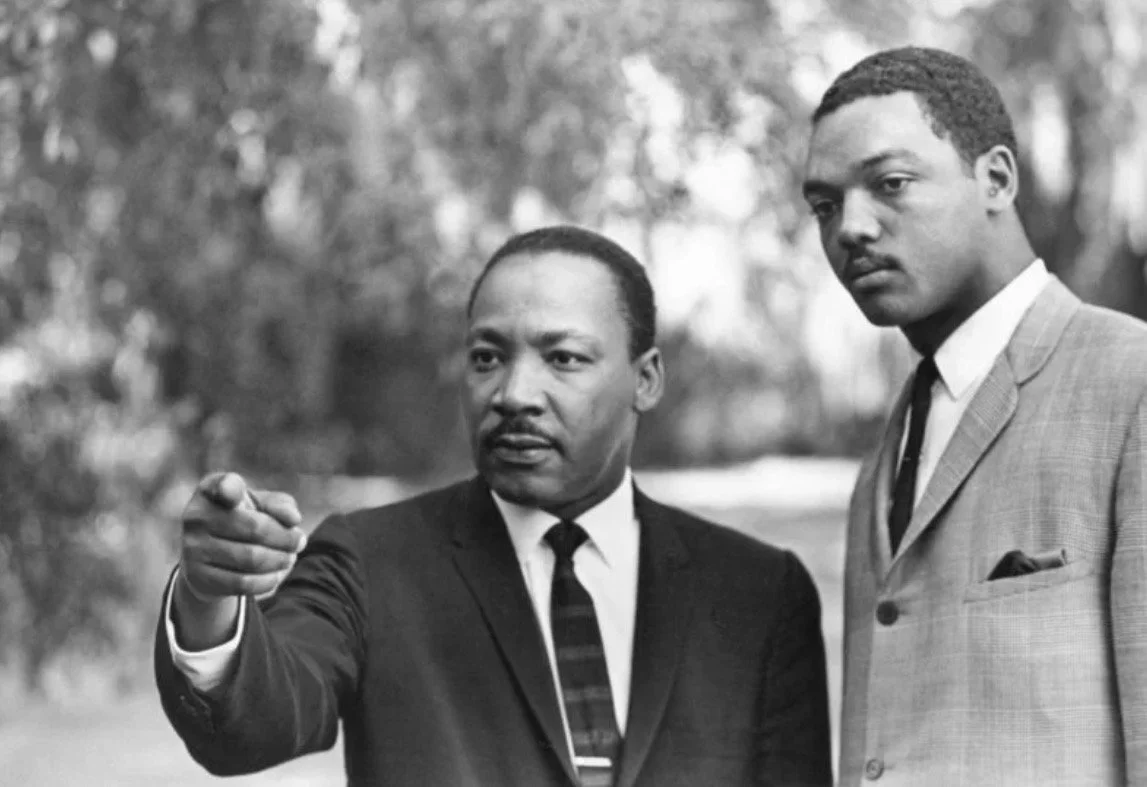
Born in Greenville, South Carolina, in 1941, Jesse Jackson’s journey began under the oppressive shadow of Jim Crow. His activism ignited in the 1960s when he joined the Southern Christian Leadership Conference (SCLC) and became a close protégé of Rev. Dr. Martin Luther King Jr. Jackson was with Dr. King at the Lorraine Motel in Memphis on that fateful day in 1968 when Dr. King was assassinated, a moment that forever cemented his resolve to carry the mantle of the movement forward.
In 1971, Jackson founded Operation PUSH (People United to Serve Humanity) in Chicago, a grassroots organization dedicated to economic justice and self-help for the Black community. It later merged with the National Rainbow Coalition to become Rainbow PUSH, a powerhouse for advocating for marginalized groups across racial and economic lines.
The "Rainbow" Presidential Runs
Jackson’s most profound political impact came during his historic runs for the Presidency of the United States in 1984 and 1988. He didn't just run for office; he redefined the Democratic Party. By building his "Rainbow Coalition"—a mosaic of Black, Latino, Asian, and working-class white Americans—he proved that a progressive, multiracial alliance could garner millions of votes. His 1988 speech at the Democratic National Convention, famous for the refrain "Keep Hope Alive," remains one of the most celebrated pieces of American oratory.
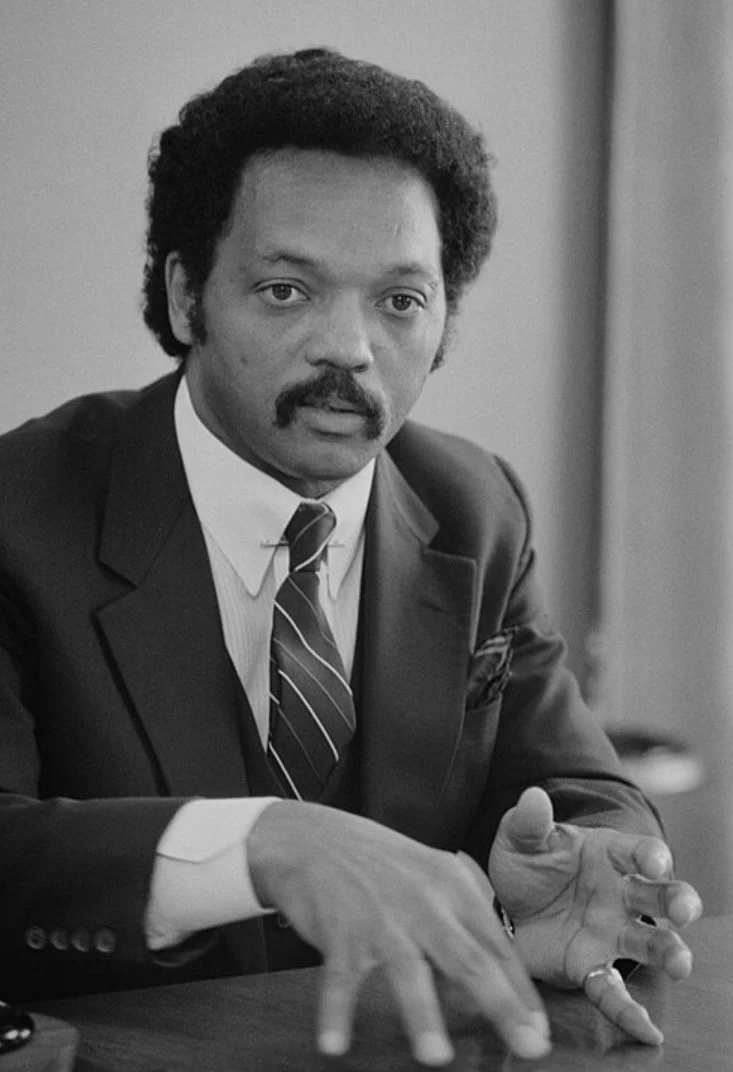
One of the most enduring legacies of Jesse Jackson’s ministry was his ability to instill a sense of radical self-worth in those the world had cast aside. His iconic "I Am Somebody" chant, which became a staple of Operation PUSH rallies and was famously performed on Sesame Street in 1971, served as a psychological lifeline for Black youth living under the weight of systemic poverty and Jim Crow's lingering shadow. By leading crowds in the rhythmic call-and-response—"I may be poor, but I am somebody; I may be on welfare, but I am somebody"—Jackson transformed a simple phrase into a powerful tool for social and emotional liberation. He understood that before a people could successfully demand civil rights from a government, they first had to reclaim their inherent dignity and humanity from within.
Honors and a Global Legacy
Jackson’s lifetime of service earned him the nation’s highest civilian honor, the Presidential Medal of Freedom, awarded by President Bill Clinton in 2000. He was also a prolific diplomat, traveling to Syria, Iraq, and Yugoslavia to negotiate the release of American hostages and prisoners, often succeeding where traditional diplomacy had failed.

A Nation in Mourning: Tributes and Controversy
The news of his passing triggered an outpouring of grief from global leaders and the public alike.
Rev. Al Sharpton, who viewed Jackson as his mentor, shared a poignant tribute: "He was a consequential and transformative leader who changed this nation and the world. He kept the dream alive and taught young children from broken homes, like me, that we don't have broken spirits."
Kamala Harris called him "one of America’s greatest patriots," noting that he spent his life "summoning all of us to fulfill the promise of America."
Barack Obama described Jackson as a "true giant" whose "historic campaigns for the presidency... paved the way for so many, including myself."
The Capitol Controversy
Despite his monumental status, a wave of disappointment swept through the community when House Speaker Mike Johnson denied a request for Reverend Jackson to lie in state (or lie in honor) at the U.S. Capitol Rotunda. The Speaker’s office cited precedent, stating the honor is typically reserved for military and government officials. Critics and supporters, however, pointed to the exception made for Rev. Billy Graham in 2018, arguing that Jackson’s role as a "moral architect" of modern America more than qualified him for the distinction. The denial was seen by many as a missed opportunity to honor a man who spent sixty years refining American democracy from the outside in.
Final Homecoming
The loss of Jesse Jackson marks the end of an era. Memorial services are being held across the nation to honor his "homegoing." His body will lie in state at the South Carolina Statehouse—a symbolic return to his roots—followed by a massive public service at the House of Hope in Chicago on March 6.
As the "living bridge" between the era of Dr. King and the modern political landscape, Jesse Jackson’s legacy is not just in the laws he helped change, but in the millions of "somebodies" he inspired to stand up and be counted.