A New Giant Leap: The Historic Success of Artemis II
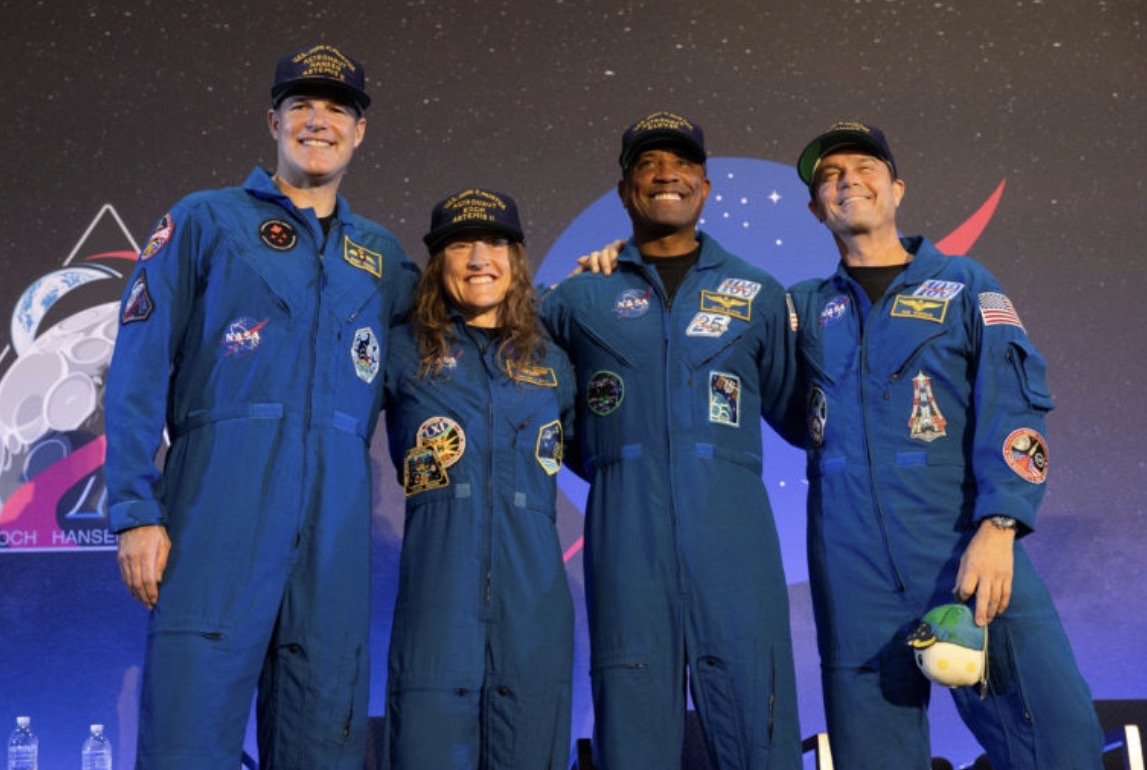
The dawn of a new era in lunar exploration has officially arrived. On April 1, 2026, the world watched in awe as NASA’s Artemis II mission roared off Launch Pad 39B at the Kennedy Space Center. This mission marked the first time in over 50 years—since the final Apollo mission in 1972—that humans have traveled beyond low Earth orbit. After a breathtaking 10-day journey that took them farther from Earth than any human in history, the crew safely splashed down in the Pacific Ocean on April 10, 2026, signaling a triumphant return to deep-space exploration.
The Crew and Their Mission
The Artemis II mission was not a landing, but a critical crewed flight test designed to prove that the Space Launch System (SLS) rocket and the Orion spacecraft are ready to carry humans safely to the Moon and back. The crew of four represented a diverse and highly skilled team:
Reid Wiseman (Commander): A seasoned NASA veteran who led the mission with precision.
Victor Glover (Pilot): The mission’s pilot and a central figure in modern space history.
Christina Koch (Mission Specialist): The record-breaking astronaut who became the first woman to travel to the vicinity of the Moon.
Jeremy Hansen (Mission Specialist): Representing the Canadian Space Agency (CSA), he became the first non-American to fly to deep space.
The Significance of Victor Glover
Among this historic crew, Pilot Victor Glover carried a particularly profound legacy. As a Captain in the U.S. Navy and an experienced astronaut, Glover became the first African American to fly to the Moon’s orbit. His role as the pilot of Orion was not merely symbolic; he was responsible for the spacecraft’s performance and manual handling during critical phases of the flight.
Glover’s presence on the mission serves as a testament to NASA’s "Artemis Generation" philosophy—the idea that space exploration belongs to all of humanity. His success on Artemis II follows his previous record-setting stay on the International Space Station, solidifying his place as a pioneer for future generations of Black explorers.
A Brief History of Artemis
The Artemis program is the successor to the legendary Apollo missions, but with a different goal: sustainability.
Artemis I (2022): An uncrewed test flight that proved the SLS rocket could successfully send an empty Orion capsule around the Moon.
Artemis II (2026): The human element. It tested life-support systems, communication, and manual maneuvering in the deep-space environment.
Artemis III and Beyond: These upcoming missions aim to land the first woman and first person of color on the lunar surface, eventually building a permanent base called the Gateway to facilitate missions to Mars.
Public Reaction and Achievements
The public reaction to Artemis II was electric. Millions tuned into live streams to see high-definition views of the "far side" of the Moon—territory rarely seen by human eyes. The crew captured over 7,000 images, including a rare solar eclipse viewed from space and stunning "earthrise" shots that reminded the world of our planet's fragility.
The mission achieved several milestones, most notably breaking the record for the farthest distance humans have ever traveled from Earth, reaching an apogee of approximately 252,756 miles. The crew also observed meteoroid impacts on the lunar surface and tested deep-space radiation protection, providing vital data for the upcoming lunar landings.
By proving that the Orion spacecraft can sustain life and navigate the trek to the Moon, Artemis II has cleared the path for Artemis III. We are no longer just visiting the Moon; we are preparing to stay.
