Confirmation Amid Chaos: Mullin Inherits a DHS Strained by Shutdowns and Scrutiny
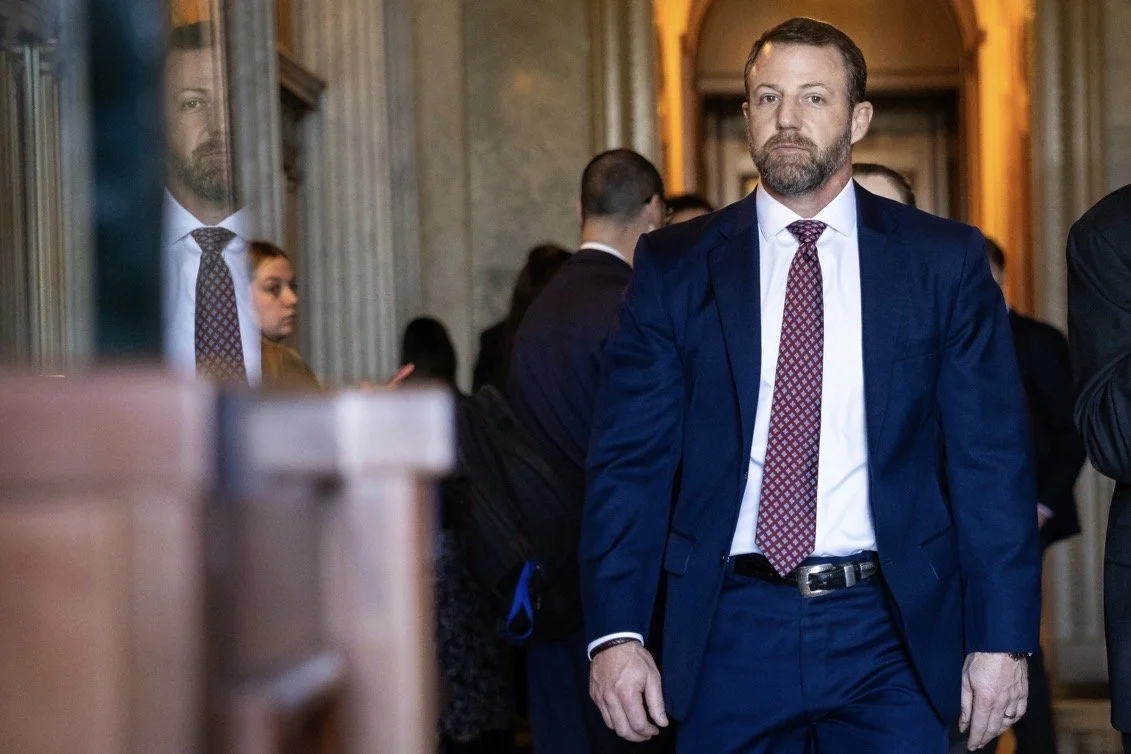
In a pivotal move for the second Trump administration, the United States Senate confirmed Senator Markwayne Mullin(R-OK) as the next Secretary of the Department of Homeland Security (DHS) on March 23, 2026. The 54-45 vote officially installs the former MMA fighter and plumbing executive at the helm of a sprawling, 260,000-person agency currently grappling with internal dysfunction, a prolonged funding lapse, and intense public scrutiny over its enforcement tactics.
A Rapid Nomination and Narrow Confirmation
Mullin’s path to the Cabinet began on March 5, 2026, when President Trump abruptly fired the previous secretary, Kristi Noem, following a disastrous week of congressional testimony. Seeking a "loyalist with a steady hand," the President tapped Mullin, an Oklahoma Republican known for his fierce "America First" advocacy.
The confirmation process was far from a "cakewalk." While Mullin is generally well-liked by colleagues, his hearing before the Senate Homeland Security and Governmental Affairs Committee was unusually combative. He faced a narrow 8-7 committee vote to advance, primarily because the committee chairman, Senator Rand Paul (R-KY), broke ranks to oppose him. Paul cited concerns over Mullin’s "temperament" and past comments that appeared to condone political violence. Despite this, Mullin secured his final confirmation with the support of nearly all Republicans and two moderate Democrats, Senators John Fetterman and Martin Heinrich, who cited their constructive working relationships with the nominee.
A Department Under Fire
Mullin inherits a department in the midst of its most significant crisis since its inception in 2002. For over a month, a DHS-specific government shutdown has left over 100,000 essential employees—including TSA agents and Border Patrol officers—working without pay. This legislative deadlock is rooted in a fierce battle over the administration’s mass deportation operations and recent tragedies.
Public outcry reached a fever pitch following the January 2026 shooting deaths of two U.S. citizens, Renee Good and Alex Pretti, by federal agents during an immigration enforcement surge in Minneapolis. The controversy was exacerbated by the agency’s use of administrative warrants to enter homes without judicial oversight—a practice Noem defended until her ouster. Furthermore, the DHS Inspector General recently accused the department of "systematically obstructing" oversight efforts, leading to a deep rift between the agency and congressional watchdogs.
Sharp Criticism from Key Leaders
The nomination drew sharp rebukes from several high-ranking officials. Senator Gary Peters (D-MI), the committee's top Democrat, argued that Mullin lacked the "experience or the temperament" to lead a department of such magnitude.Peters specifically highlighted an ethics investigation into a 2023 incident where Mullin nearly engaged in a physical altercation with a union leader during a hearing.
"The American people deserve a leader who is steady and proven under pressure, not just someone better than the very low bar set by his predecessor," Peters remarked during the hearings.
Even some former DHS officials expressed skepticism, noting that while Mullin is a "warrior" for the President’s agenda, he lacks a background in the complex technical fields of cybersecurity (CISA) and disaster response (FEMA) that fall under his new remit.
The Path Forward
Mullin has signaled a slight pivot from Noem’s approach, promising to require judicial warrants for home entries and pledging to be more "transparent" with Congress. However, he remains a staunch supporter of the administration's hardline border policies. As he takes the oath of office, Mullin’s primary challenge will be to secure funding for his unpaid workforce while navigating a political landscape that has become increasingly hostile toward the agency he now leads.
