Conflict Escalates as U.S. and Israel Launch Massive Strikes Across Iran
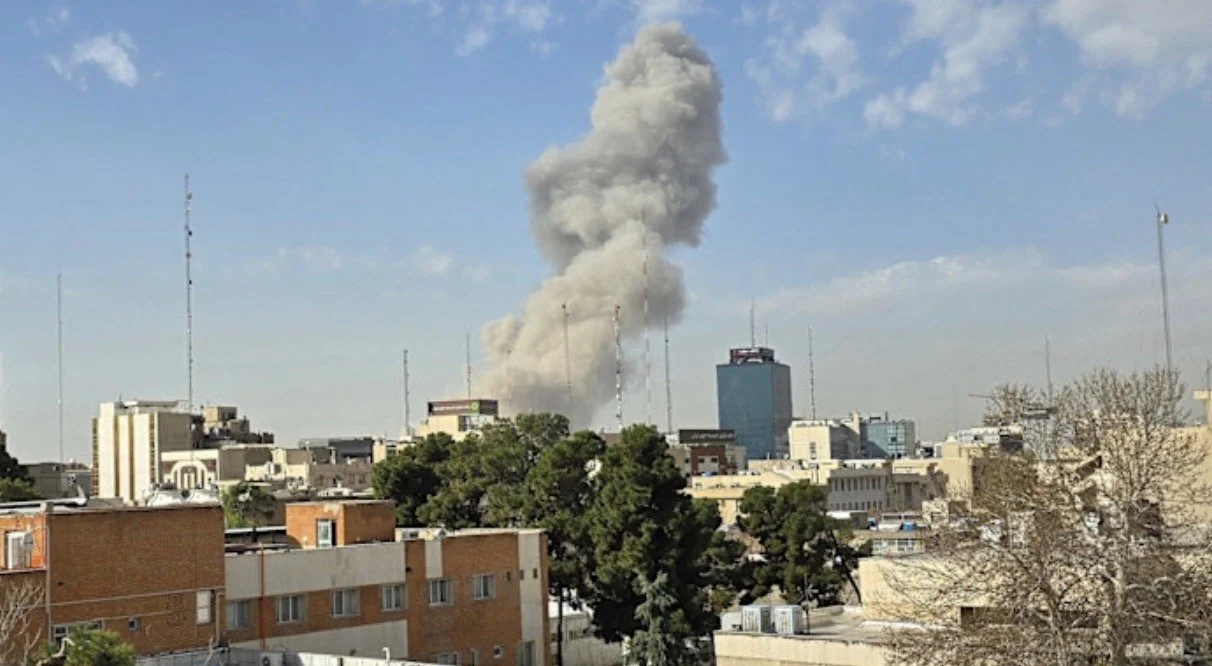
The landscape of Middle Eastern geopolitics shifted violently as the United States and Israel launched a massive, coordinated military offensive against the Islamic Republic of Iran on February 28. 2026. Codenamed Operation Epic Fury by the U.S. Department of Defense, the strikes represent the most significant escalation in the region in decades, aiming to dismantle Iran's military infrastructure and, according to President Donald Trump, facilitate a change in leadership.
The Scope and Goals of the Attack
The operation commenced in the early hours of Saturday morning, involving a combination of U.S. Tomahawk missiles, long-range drones, and Israeli fighter jets. The primary objectives, as stated by the White House, were threefold:
Neutralizing Nuclear Capabilities: Targeting facilities suspected of advancing Iran’s nuclear program.
Military Degradation: Destroying missile launchers, air defense systems, and Islamic Revolutionary Guard Corps (IRGC) command centers.
Regime Change: Explicitly calling for the Iranian people to "take over their government."
Strikes were reported across major Iranian cities, including Tehran, Isfahan, Qom, Karaj, and Tabriz. High-value targets included the compound of Supreme Leader Ayatollah Ali Khamenei.
Casualties and Public Response
The human cost of the initial wave has been stark. The Iranian Red Crescent reported at least 201 deaths and over 700 injuries, including a tragic incident where a school in Minab was struck. The reported strike on the primary school in Minab has become a focal point of international grief, as local officials confirm the deaths of several young girls during their morning lessons. Witnesses described a scene of utter devastation where a site of learning was instantaneously transformed into a pile of rubble and twisted rebar. This specific tragedy has ignited a firestorm of criticism against the precision of the "Epic Fury" operations, shifting the public narrative from strategic military targets to the heavy toll paid by Iranian civilians.
Inside Iran, the public response is deeply fractured. For months, the country has been gripped by anti-government protests fueled by economic collapse. While some citizens viewed the strikes as a potential catalyst for liberation, others took to the streets of Tehran to protest the "U.S.-Israeli aggression," citing the loss of civilian lives and the violation of national sovereignty.
Political Backlash and Legal Debates
The domestic political response in the U.S. was swift and polarized. Democratic leaders have been vocal in their condemnation of the unilateral action. Former Vice President Kamala Harris issued a stinging critique of the operation:
"Donald Trump is dragging the United States into a war the American people do not want. I am opposed to a regime-change war in Iran, and our troops are being put in harm's way for the sake of Trump's war of choice.This is a dangerous and unnecessary gamble with American lives."
The legality of the strikes has become a focal point of contention in Washington. President Trump ordered the attacks without seeking a formal Authorization for Use of Military Force (AUMF) from Congress. Critics argue this violates the War Powers Act of 1973, which requires the President to consult with Congress before introducing U.S. forces into hostilities.
While the administration argues the strikes were a "pre-emptive" necessity to thwart imminent threats, constitutional scholars and members of Congress—led by Senators like Tim Kaine—contend that without an immediate defensive necessity, the move is an unconstitutional "war of choice."
Senate Majority Leader John Thune praised the operation, stating that Iran’s nuclear ambitions and support for terrorism posed an "unacceptable threat" and commending the administration for taking decisive action to thwart them. In contrast, Representative Thomas Massie has emerged as a fierce Republican critic, denouncing the strikes as an unauthorized "act of war" and arguing that they contradict the "America First" principle of avoiding foreign entanglements. To reassert legislative authority, Massie is partnering with Democratic Representative Ro Khanna to force a vote on a War Powers Resolution, emphasizing that the Constitution requires Congress—not the President—to decide such matters of war.
The Iranian Government's Defiance
The Iranian government has characterized the attacks as "heinous" and a "flagrant violation of international law." Foreign Minister Abbas Araghchi stated that the Islamic Republic would respond with "authority," a promise quickly followed by missile barrages targeting Israel and regional U.S. installations. As the "Epic Fury" continues, the world watches to see if this is the beginning of a total regional war or a devastatingly brief chapter in a long-standing conflict.
