The Check on Trade: Supreme Court Strikes Down Trump’s Emergency Tariffs & Limits Presidential Authority in Landmark Case
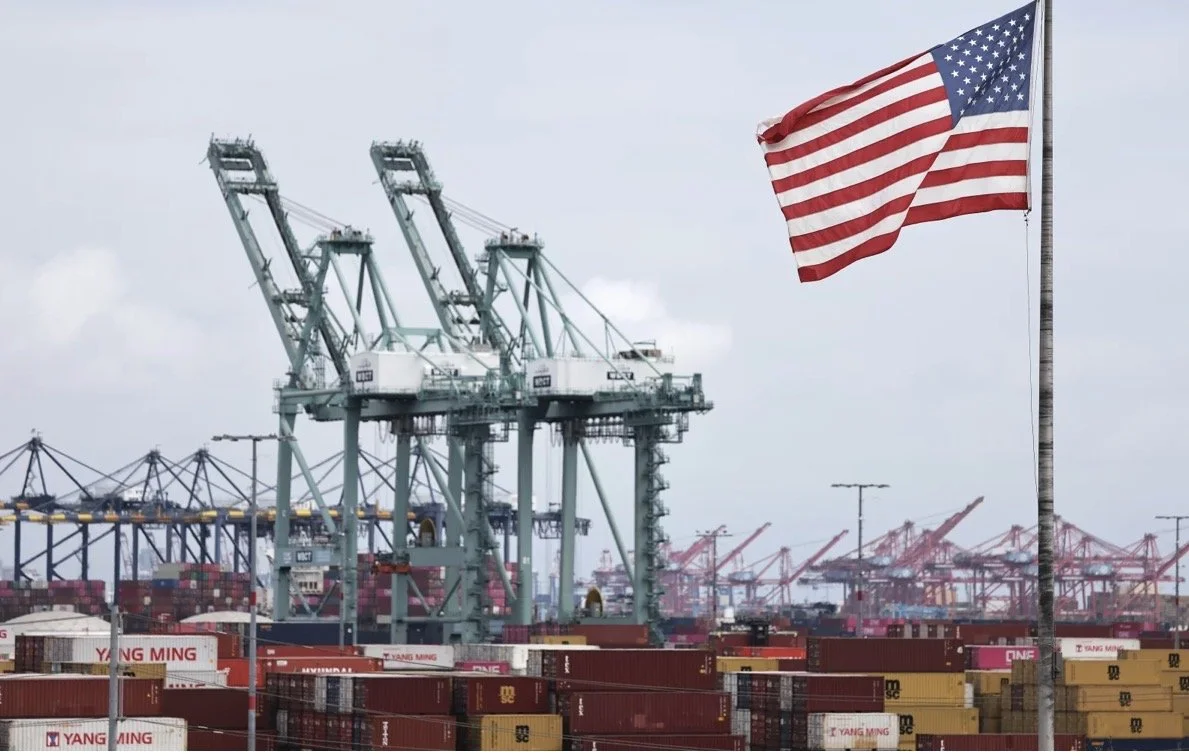
In a landmark decision that has sent shockwaves through the global economy, the United States Supreme Court ruled on February 20, 2026, to strike down the centerpiece of the Trump Administration’s trade agenda. The 6–3 ruling in Learning Resources, Inc. v. Trump invalidates the sweeping "Liberation Day" and "reciprocal" tariffs, marking a significant constitutional check on executive authority.
The Court’s Decision and the 6–3 Vote
The Supreme Court held that the International Emergency Economic Powers Act (IEEPA) of 1977 does not grant the President the power to unilaterally impose tariffs. Chief Justice John Roberts, writing for the majority, emphasized that the power to tax and levy duties resides exclusively with Congress under Article I of the Constitution.
The ruling saw an unusual coalition. Chief Justice Roberts was joined by the court’s three liberal justices—Sotomayor, Kagan, and Jackson—as well as two Trump appointees, Gorsuch and Barrett. The majority applied the "Major Questions Doctrine," arguing that an executive action of such "vast economic and political significance" requires clear, specific authorization from Congress—something the IEEPA lacks.
In a sharp dissent, Justices Thomas, Alito, and Kavanaugh argued that the law’s broad language allowing the President to "regulate importation" during a national emergency was sufficient to justify the tariffs.
The Administration’s Response
President Trump reacted with characteristic defiance, denouncing the ruling as "deeply disappointing" and a "disgrace to our nation." In a press conference held hours after the decision, he specifically targeted Justices Gorsuch and Barrett, calling their votes a "betrayal."
However, the Administration immediately pivoted to "Plan B." To maintain pressure on trading partners, the President announced:
New 10% Global Tariffs: Invoked under Section 122 of the Trade Act of 1974, which allows for temporary 150-day surcharges.
Section 301 Investigations: Launching new probes into "unfair trade practices" to justify more permanent levies.
Continued Enforcement: Clarifying that tariffs on steel, aluminum, and Chinese goods imposed under differentstatutes (Sections 232 and 301) remain in full effect.
Political and Public Reaction
The reaction on Capitol Hill split predictably along party lines, with some notable exceptions:
Democrats: Celebrated the ruling as a victory for the rule of law. Senate Minority Leader Hakeem Jeffries stated the court "correctly stopped a reckless executive overreach that was driving up costs for American families."
Republicans: While many staunch allies backed the President’s "Plan B," some fiscal conservatives, including Senator Rand Paul, praised the court for reclaiming Congressional authority over taxation.
The Public: Public sentiment has been increasingly wary. Recent polling by the Washington Post-ABC News-Ipsosshowed only 34% approval for the Administration’s handling of tariffs, with 64% of Americans concerned about rising prices at the grocery store and gas pump.
The Logic Behind the Tariffs
The Trump Administration argued that the tariffs were a necessary "economic weapon" to:
Reduce Trade Deficits: Forcing a rebalancing of trade with nations like Mexico, Canada, and China.
Curb Fentanyl Flows: Using "Trafficking Tariffs" as leverage to force foreign governments to crack down on drug cartels.
Encourage Re-shoring: Making foreign goods more expensive to incentivize domestic manufacturing.
Impact on Businesses
For the business community, the ruling is a double-edged sword. While groups like the National Retail Federation and Business Roundtable celebrated the removal of IEEPA-based duties, the immediate concern is the $175 billion in tariffs already collected.
Small businesses, which bore the brunt of the costs, are now looking for a "refund framework." However, the Supreme Court remained silent on how—or if—the government must pay back the billions of dollars already deposited. For multinational corporations, the sudden shift back to "regular order" trade investigations means a temporary reprieve from broad taxes, but a long-term outlook of continued volatility and "murky waters."
