The Post in Crisis: How One-Third of the Washington Post Vanished Overnight Marking a Turning Point for Traditional Media
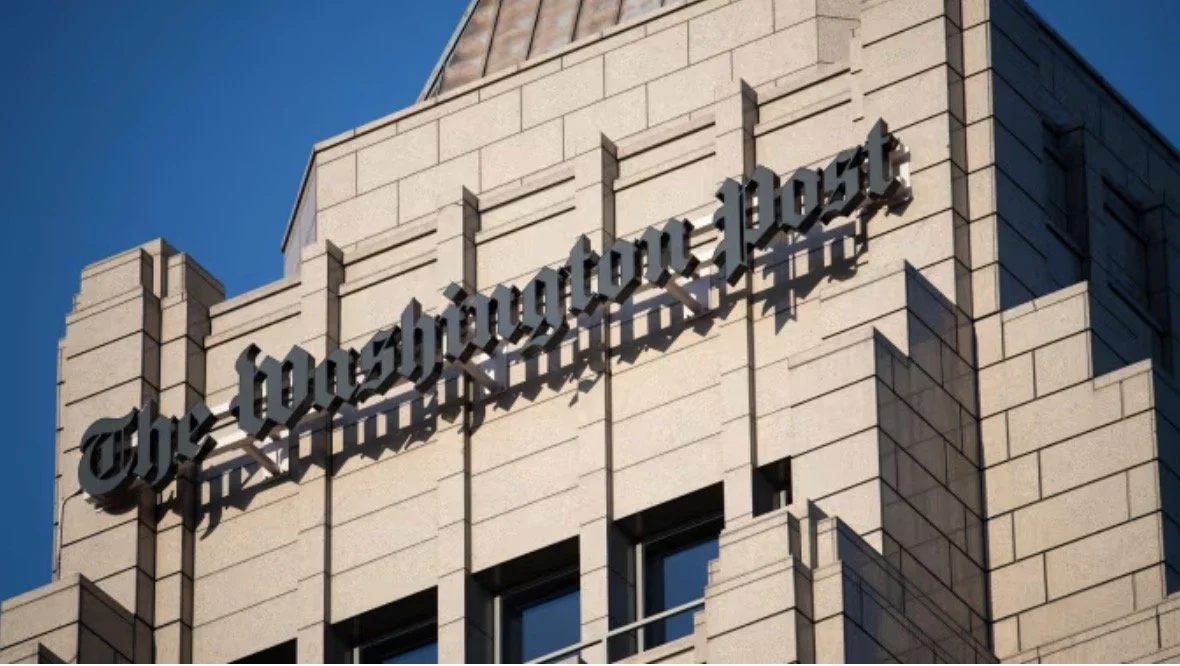
In early February 2026, the halls of the Washington Post—the storied institution that once toppled a presidency through the dogged reporting of Watergate—felt more like a funeral parlor than a newsroom. On Wednesday, February 4, the "Democracy Dies in Darkness" outlet announced a devastating "restructuring" that saw the elimination of roughly one-third of its entire staff.
The Numbers: A Newsroom Decimated
The scale of the cuts is historic and jarring. Reports indicate that approximately 300 journalists were let go from a newsroom that once boasted 1,000 employees at its peak just a few years ago. The layoffs were not merely a trimming of the edges; they were a gutting of the paper’s core identity.
The Post officially shuttered its dedicated sports and books sections, drastically scaled back its local metro coverage, and decimated its international desk. In a move that shocked the industry, the entire Middle East staff was eliminated, and the correspondent covering the war in Ukraine was let go while still stationed in a combat zone.
A "Death Spiral" in the Traditional Media Landscape
The crisis at the Post serves as a grim case study for the broader "death spiral" of traditional media. Under CEO Will Lewis, the paper admitted to losing $177 million over the last two years. The traditional business model—relying on high-cost journalism funded by digital subscriptions and advertising—is buckling under the weight of three primary forces:
The AI Shift: Search traffic, once the lifeblood of digital growth, has plummeted by nearly 50% as AI-generated summaries replace the need for users to click on news articles.
The Creator Economy: Modern audiences are increasingly turning to low-cost "influencer" commentators on TikTok and YouTube, who offer opinionated takes without the overhead of a global reporting network.
Content Fatigue: Executive Editor Matt Murray noted that the Post’s structure was rooted in a "bygone era," and that the paper had failed to keep pace with video-first consumption habits.
Political Pressure and "Brand Destruction"
Beyond economics, the Post is reeling from intense political pressure. The paper lost an estimated 250,000 subscribers in late 2024 after owner Jeff Bezos blocked a planned endorsement of Kamala Harris—a move widely interpreted as an attempt to "anticipate obedience" toward Donald Trump.
Now, with Trump in his second term and regularly labeling traditional outlets as "fake news," the pressure has shifted from rhetorical to financial. Former Executive Editor Marty Baron described the layoffs as "self-inflicted brand destruction," suggesting that by chasing a more "balanced" or conservative-friendly tone to appease political critics, the paper alienated its most loyal readers without gaining new ones.
Economic Impact: The Growing Unemployment Crisis
These layoffs are not occurring in a vacuum. They add to a growing pile of white-collar unemployment in the United States. In 2025 alone, the entertainment and media sectors saw over 17,000 jobs slashed, an 18% increase from the previous year.
While the national unemployment rate sits at 4.4%, the "hidden" unemployment in specialized fields like journalism is creating a talent vacuum. As hundreds of reporters hit the pavement simultaneously, they enter a job market where their primary competitors—other legacy outlets like the New York Times or Los Angeles Times—are also tightening their belts or implementing their own "strategic resets."
What Remains of the Fourth Estate?
The gutting of the Washington Post raises existential questions for the future of traditional media:
If a billionaire like Jeff Bezos cannot—or will not—subsidize a world-class newsroom, who will?
As local and international desks vanish, who will be left to provide "on-the-ground" facts in an era of deepfakes and AI-generated narratives?
Can a democracy function when its primary "watchdogs" are reduced to skeleton crews focused solely on high-traffic national politics?
As the Post attempts to pivot toward a leaner, AI-integrated future, the "darkness" mentioned in its famous slogan feels closer than ever. The tragedy isn't just the loss of 300 jobs; it's the potential loss of the accountability those 300 people provided to the public.
